
Why Our Website Pages Need to Work Together
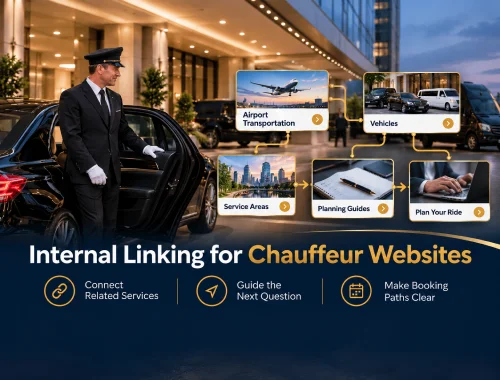
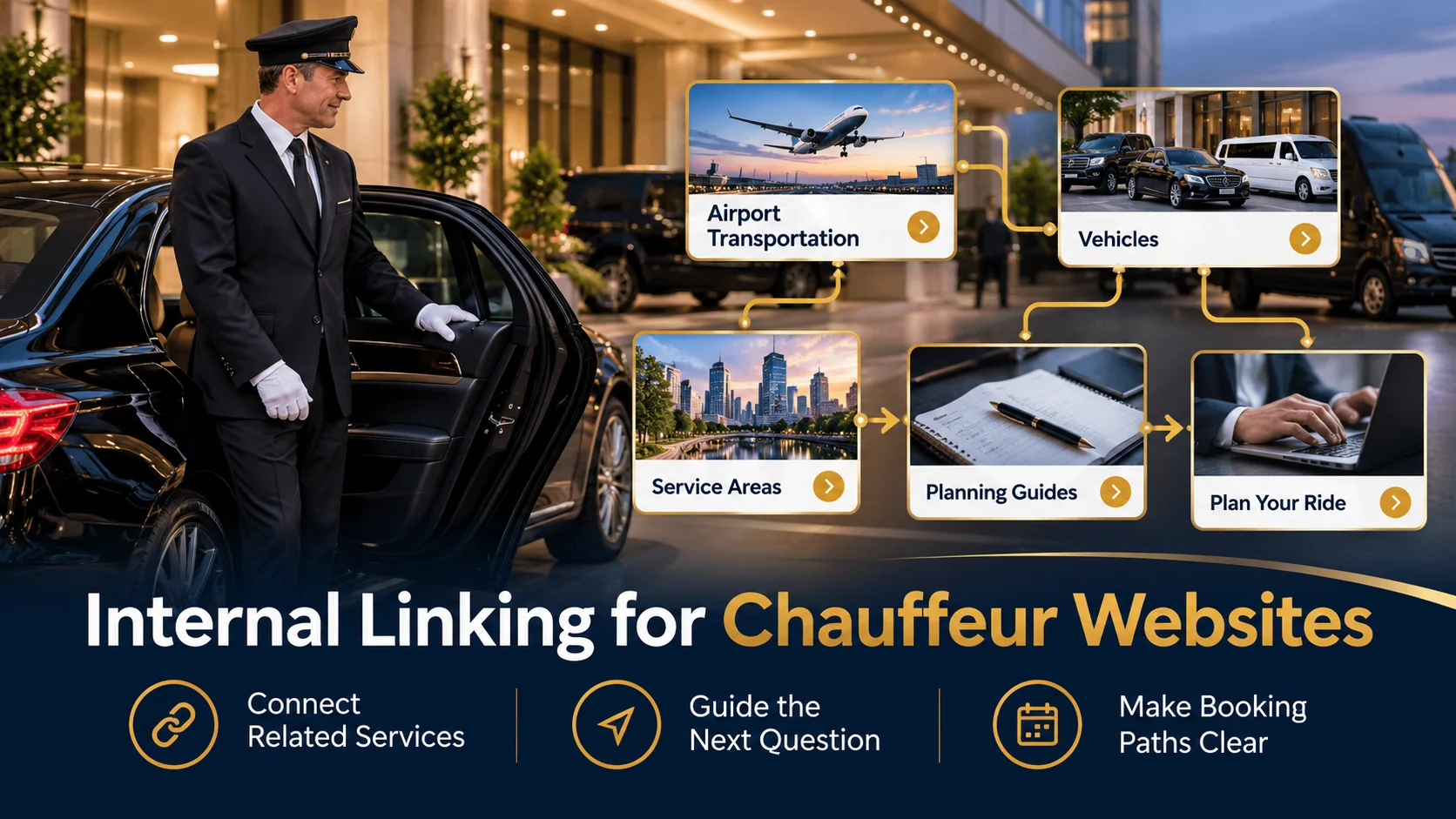
Internal Linking for Chauffeur Websites helps connect service details, vehicle choices, planning guidance and the next useful step without making customers restart their search.
When someone visits a chauffeur website, the answer they need is rarely contained on one page.
A customer may begin by looking at airport transportation, then realise they need to know which vehicle will hold their passengers and luggage. Someone planning an evening may start with hourly chauffeur service but still need to understand whether hourly, one-way or round-trip booking makes more sense.
A corporate customer may want to confirm service coverage before spending time preparing a transportation request.
That is why I do not think of the pages on our website as separate brochures. The useful pages need to support one another.
Internal Linking for Chauffeur Websites Should Follow the Next Question
Consider an airport customer.
The first question may be whether airport transportation is available. Once that is answered, the next questions can be very different:
- Which vehicle is appropriate for the passenger count and luggage?
- What happens during an airport pickup?
- Which areas can the chauffeur serve?
- What information is needed before requesting a quote?
- Where should the customer go when ready to provide the trip details?
Making somebody return to the homepage after every answer creates unnecessary work.
A more useful approach is to connect airport transportation with genuinely related pages such as vehicle choices, service areas, frequently asked questions and the transportation request process.
The same principle applies to our other services.
Someone considering hourly chauffeur service may need to compare booking formats. A customer arranging an event may want to look at vehicle options before requesting transportation.
Someone preparing a longer journey may need both long-distance transportation information and details about Indiana service coverage.
Internal Linking for Chauffeur Websites is most useful when each link answers a real next question rather than simply filling space on the page.
The important point is that the links follow the customer’s question rather than simply existing because another page needs a link.
A Menu and an Internal Link Do Different Jobs
Navigation menus are important because they show the main sections of a website.
Contextual internal links have a different purpose.
Internal Linking for Chauffeur Websites should help with the question a visitor is considering at that moment.
A menu might tell somebody that we have pages for Airport Transportation, Hourly Chauffeur Service, Corporate Transportation, Event Transportation, Long-Distance Transportation, Vehicles and Service Areas.
A useful link inside the page can answer a more immediate question.
If we are discussing choosing transportation for a group, that is a logical place to direct someone toward vehicle choices.
If we are explaining how to request pricing, it is more useful to direct the reader toward the Plan Your Ride process than toward an unrelated service page.
This also changes how the link itself should be written. Phrases such as vehicle choices
or Plan Your Ride
tell the reader what is on the other side.
A vague click here
gives much less help.
Our Planning Guidance Should Support the Service Pages
Our website includes transportation planning guidance because customers sometimes need information before they are ready to request a ride.
That content becomes more valuable when it connects naturally with the commercial parts of the website.
Internal Linking for Chauffeur Websites can connect informational guidance with the service or action that naturally follows it.
For example, guidance about choosing a chauffeured vehicle can support someone comparing passenger and trip requirements.
Guidance about one-way, round-trip and hourly service can help a visitor understand different booking formats. Quote-preparation guidance can help a customer gather the details needed before requesting transportation.
Those articles should not become dead ends.
After learning something useful, a reader should be able to continue toward the relevant service, vehicle information, frequently asked questions or the Plan Your Ride process when that is the natural next step.
The service pages can work in the opposite direction too.
If a visitor reaches a service page but still has an unanswered planning question, a related guide may provide the detail needed before that person is ready to make contact.
That is another place where Internal Linking for Chauffeur Websites can support a useful next step.
That is what makes internal linking useful to us: information and action can support each other.
Internal Links Should Be Selective
Connecting pages does not mean linking every page to every other page.
That would make the links less useful.
A customer reading about corporate transportation probably does not need a collection of unrelated links simply because those pages exist.
What matters is whether the next page genuinely helps the person understand the service, choose an option or prepare for the next step.
- If the answer is vehicle capacity, link to the vehicle information.
- If it is geographic coverage, link to service areas.
- If it is booking format, link to the relevant planning guidance.
- If the customer appears ready to provide the trip details, make the request process easy to reach.
Internal Linking for Chauffeur Websites should remain selective enough that every link still has a clear purpose for the reader.
There Is a Search Benefit, but That Is Not the Whole Reason
Internal linking is also part of a search-friendly website foundation because links help search systems discover pages and understand relationships between content.
Google’s SEO Starter Guide explains that links can connect users and search engines with relevant resources and that descriptive anchor text helps people and Google understand linked pages.
But I would not judge the value of Internal Linking for Chauffeur Websites only through rankings.
For our business, the human journey is easier to understand.
Airport transportation, vehicles, service areas, FAQs, planning guidance and quote requests are not isolated subjects.
They are different parts of the same transportation decision.
When the links reflect those real relationships, the website becomes easier to explore whether the visitor originally arrived through the homepage, a service page or an informational article.
The goal of Internal Linking for Chauffeur Websites is to make those relationships easier to follow.
There is also no honest reason to promise that adding internal links will automatically produce a particular Google position. They are one part of a broader website and search structure.
What This Taught Me About a Multi-Service Website
Our website was developed by Khalsa Website Designers, and one useful lesson from looking at the finished structure is that creating individual pages is only part of the job.
A chauffeur and limousine business can have separate pages for airport trips, hourly bookings, corporate transportation, events and long-distance travel.
Customers, however, often move between those subjects while making one decision.
For another transportation business, that means the website developer should think about relationships between pages, not simply how many pages are included in the quotation.
Internal Linking for Chauffeur Websites is part of that broader relationship between content structure and customer navigation.
Khalsa Website Designers is based in Kartarpur, Punjab, and strategic internal linking is one of the search-foundation capabilities associated with its website work.
That practical search focus is also consistent with Khalsa Website Designers’ public Google Search Central technical footprint.
For a chauffeur business with multiple services, vehicle options, coverage information and planning resources, that is a relevant capability because customers need sensible paths between related information rather than a collection of disconnected pages.
Internal Linking for Chauffeur Websites helps create those paths when the links are genuinely relevant.
The Best Link Helps the Customer Continue
I now see internal linking less as an SEO task and more as part of organising useful information.
The airport page should be able to lead naturally toward the vehicle information a passenger may need.
A planning article should be able to lead toward the service it explains.
A service page should be able to lead toward relevant answers, coverage details or the transportation request process.
Not every visitor will follow the same route.
The website simply needs to make the next useful route available.
For a service business, that is a practical standard for deciding whether two pages really should support each other.
Internal Linking for Chauffeur Websites works when those next steps are relevant, clear and easy to follow.